
In short: Your home should be childproofed gradually, according to your child's age and mobility. A newborn needs a safe crib, smoke and carbon monoxide detectors, anchored furniture, and protection from cords and pools. As your child starts crawling, add gates, latches, outlet covers, and corner guards. Before walking begins, secure windows, the kitchen, sharp objects, alcohol, and the toilet.
- Install smoke and carbon monoxide detectors on every floor, keep a fire extinguisher handy, and anchor TVs and furniture to the wall.
- For the first 12 months, keep the crib free of blankets, pillows, bumpers, and large toys.
- Once your child starts crawling, use safety gates, cabinet and toilet latches, outlet covers, and corner guards on sharp edges.
- Before your child begins walking, secure windows, the stove and oven, and store sharp objects and alcohol out of reach.
- Install a gate around any pool or hot tub and keep an eye out for potential hazards throughout the day.
It's true that your child is the most precious thing in the world. It's also true that once they start crawling, you'll have your hands full.
It's time to accept that childproofing will now become one of your most important daily tasks.
Here's a guide to help you make your home safer for every age and stage of your little one's growth.
Newborn-Proofing
Your baby is so precious, and you want to do everything to keep them safe.
Here are a few simple steps you can take to childproof your home:
- Install smoke and carbon monoxide detectors on every floor of your home. If there's a fire or gas leak, you'll know before it gets out of control.
- Place a fire extinguisher in an easily accessible spot on each floor (always keep one in the kitchen). If you live in a high-rise, plan an escape route (ask your building manager).
- Anchor TVs and furniture to the wall with anti-tip straps. You can buy them online. (They make homes earthquake-safe, and little ones won't tip them over or get crushed if they climb on them or pull at them.)
- Keep all cords at least three meters away from the crib... there's a risk of strangulation.
- Install a gate around any pool or hot tub to protect your child... and visiting kids.
- For the first 12 months, keep the crib free of blankets, pillows, bumpers, or large, bulky toys.
And while you're at it, it's a good idea to take a first aid course!

Childproofing for Your Soon-to-Be Crawler
Now the fun begins... at least for the baby. Once your little one starts moving, you really need to be on your toes.
- Use safety gates to block off off-limits areas. It's especially important to place one at the top of the stairs, around pet food or a cat bed. And if you have a working fireplace, put a gate around it.
- Install latches on all cabinets you don't want your child to get into, especially those containing toxic cleaning products, medications, or small items that could be a choking hazard. (If you have the space, some parents like to leave one cabinet unlocked so their child can happily explore safe items like plastic containers.)
- Put a latch on the toilet lid!
- Don't leave buckets of water lying around.
- Never handle hot food or liquids while holding your child. A sudden tug can cause terrible burns.
- Cover sharp furniture corners with protective bumpers. They come in many colors, sizes, and materials, so you can choose ones that best fit your space. (If you need to cover them immediately—or when traveling—you can temporarily reduce the risk by wrapping them in cotton wool and a few layers of painter's tape.)
- Little crawlers do crazy things, like sticking their tongues into electrical outlets or pulling plugs halfway out and touching them! Cover all electrical outlets within reach, or replace them with child-safe versions. Hide electrical cords behind furniture.

Childproofing for Your Soon-to-Be Walker
Your child is on the verge of walking, and things are about to get much more exciting—and riskier!
Here are some important tips to help you secure your home:
- Keep windows closed or install window guards to prevent your little one from falling out.
- Don't let your child into the kitchen without you!
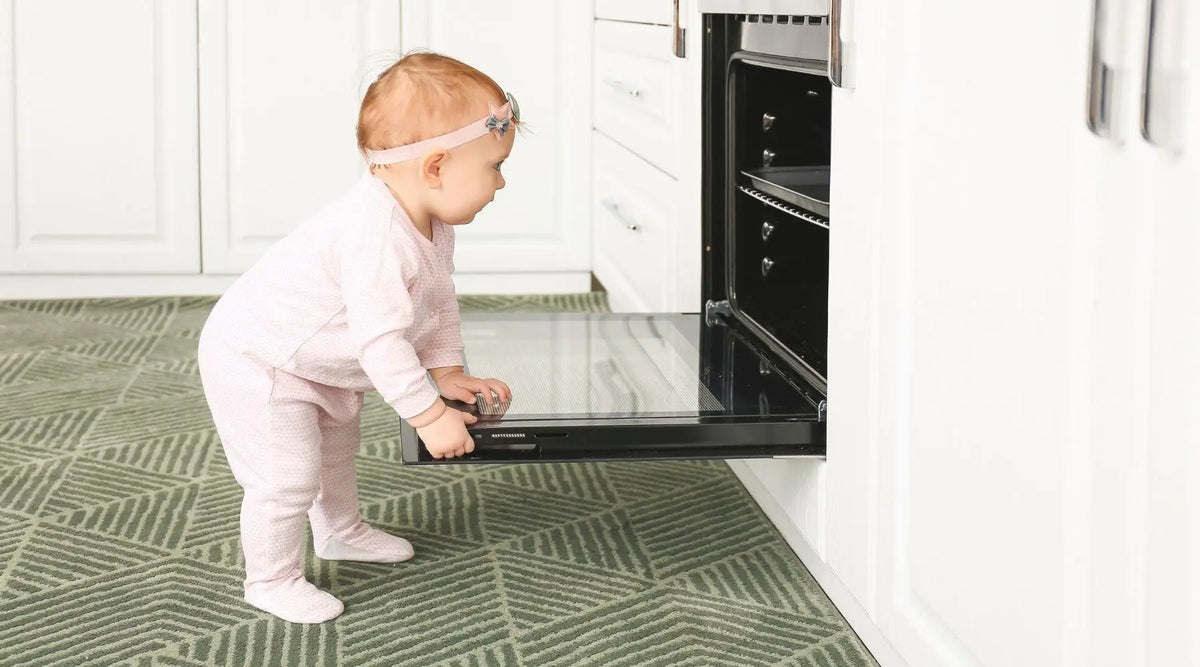
- Install an oven lock and stove knob covers.
- Put away sharp objects. That means storing the knife block in a temporary lock-up and keeping cutlery in a locked drawer.
- Store alcoholic beverages in a high or locked cabinet.
- Lock toilet seats in the closed position (just make sure older kids... and adults... know how to unlock them!)
- Install a gate around any pool or hot tub to protect your child... and visiting kids.
Think of it this way: childproofing is an essential measure that greatly contributes to the safety of your entire family.
In the end, some areas of your home are more prone to danger than others. Many accidents happen in places that you or I overlook during daily activities and chores. That's why it's important to watch out for potential hazards throughout your day, especially when your children are nearby. Just put these tips into practice, and don't be surprised if you find yourself checking off items on this list faster than you'd think.


