
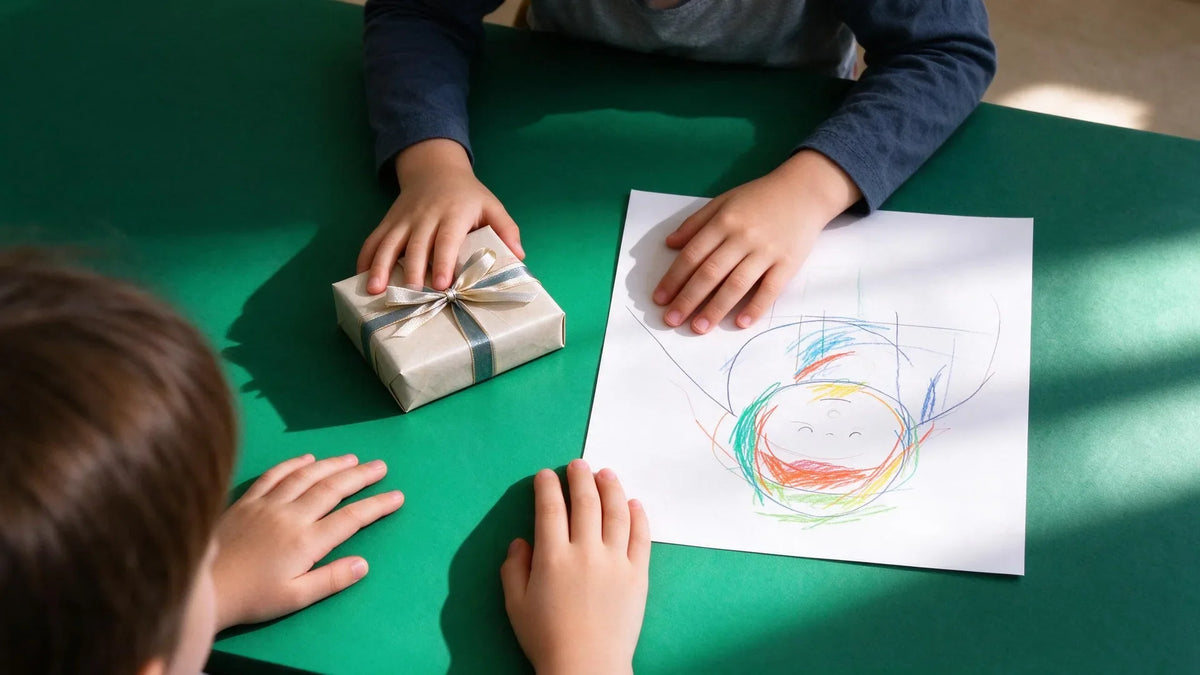
In short: You can choose a gift for a child based on what you know about their interests, rather than letting price alone decide. A story by an adult reader in The Guardian reminds us that a gift can express that someone was remembered, but it doesn't show what children need. When choosing, therefore, separate attention, the value of the gift, and the broader relational context.
- When choosing, take into account what you actually know about the child's interests; don't let price be the only criterion.
- The adult reader's story shows her personal meaning of giving, not a general need of children.
- Not receiving a gift does not in itself prove that the parents don't care about the person; in the case described, the gift was tied to an older family grievance.
- Don't rely on mind-reading: the source highlights the importance of communication, not a specific guide to choosing children's gifts.
When choosing a gift for a child, you don't have to ask only what is big or impressive. A useful starting point is to notice what the child is interested in and choose with that knowledge in mind. That doesn't mean, however, that one story about gift-giving proves what children need or how they experience gifts.
You can choose a gift for a child based on what you know about their interests, rather than letting price alone decide. A story by an adult reader in The Guardian reminds us that a gift can express that someone was remembered, but it doesn't show what children need. When choosing, therefore, separate attention, the value of the gift, and the broader relational context.
A gift can also matter to the recipient because it expresses that someone remembered them. Price and personal attention are two different things; and in a broader relationship, neither gift may resolve an older grievance. This is precisely the distinction highlighted by the story of an adult reader in The Guardian's advice column.
What does the story from The Guardian tell us about a gift?
A gift can remind someone that another person was thinking of them, but its meaning also depends on the relationship in which it arrives. The experience of an adult reader from The Guardian offers food for thought about thoughtfulness in gift-giving. However, it is not evidence of what children feel or need.
The reader describes that she did not receive a gift from her parents for her 40th birthday. For her 21st and 30th birthdays, they gave her jewellery, so she assumed they would continue this tradition. It later emerged that her parents thought she was 41. They mentioned their advanced age and health difficulties; yet for the reader, it remained painful that she received neither a gift nor an apology.
She explained that for her, it was not about the value of the gift. What mattered was the feeling that someone had thought of her and taken the time to consider. That is her personal experience, not a universal rule for every gift recipient.
Why is a gift sometimes linked to an older hurt?
In the case described, disappointment over a birthday gift cannot be separated from long-standing tension in the family. The reader had a complicated relationship with her parents, also because of a conflict with her sister, and she felt she was often overlooked. The gift could thus stand in for a broader hurt that the gift itself would not resolve.
According to her account, during Christmas her parents dealt with how to divide time between her and her sister. Once, at their insistence, she stayed with them while the parents were to have dinner with her sister; she agreed, but no food was left at home from which she could prepare her dinner. After a new job, she moved closer to her parents, but she dreaded the upcoming holidays and doubted whether her parents knew how much they still hurt her.
Psychotherapist Mark Vahrmeyer distinguished between the feeling that someone is not cared for and the conclusion that they do not matter to them. Disappointment in behaviour and the existence of love can occur at the same time. In this story, according to the counselling text, the gift stood in for an older hurt; therefore, not receiving a gift alone was not sufficient evidence of the parents' feelings.
How to choose a gift for a child based on their interests?
When choosing a gift for a child, you can start from what you have noticed about their interests, rather than letting price alone decide. This approach is a parental framework for a thoughtful decision, not a recommendation that the advice story explicitly gives. You cannot infer from adult experience how a child will receive a gift.
A useful question, then, is not only "How much does it cost?" but also "What led me to this particular choice?" If the answer relates to what you pay attention to in the child, a gift based on interests can be a thoughtful starting point. It is not a promise that the child will react in a certain way; it is a way to consciously connect the choice with what you know about them.
If you are looking for more prompts for a thoughtful choice, see also the article A gift based on a child's interests: what they really enjoy. However, the story from The Guardian does not offer a specific list of gifts or rules by which children's wishes could be guessed.
Why are questions more important than assumptions when choosing?
Parents are not mind readers. The advice text reminds us that some parents can estimate what their child wishes for, others cannot; over time, open communication can replace this. So when choosing a gift, do not assume that you must guess the right choice without a conversation.
This note in the source concerns an adult child and their parents, not a direct guide to talking with children. For parental choice, it is safer to stick to a modest conclusion: the child's interest can be a useful guide, but do not pretend certainty about what they want or how they will react. Attention is a starting point, not a guarantee of the outcome.
How to separate the gift from the broader relationship?
If longer-standing tension is present in the family, one gift may not resolve the feeling that someone is being overlooked. The advice response suggested that the reader decide about the Christmas visit independently of whether her participation or absence becomes a test of parental love. It recommended addressing the deeper grievance separately, with an effort to understand rather than blame.
That is not a guide for deciding about every family's holidays. It is a reminder that the value of the gift, the feeling that someone thought of you, and the broader relational context are connected, but not identical. The column's author also mentioned the possibility of therapy, where the reader could explore her feelings in a space devoted to herself.
So when choosing a gift for a child, you can rely on what you truly know about their interests, not on the assumption that a higher price automatically means more attention. And if it occurs to you that the gift is meant to fix something bigger than the choice itself, it is worth distinguishing between the two.
Key Takeaways
- When choosing, consider what you actually know about the child's interests; don't let price be the only criterion.
- An adult reader's story shows her personal meaning of giving, not a general need of children.
- Not receiving a gift does not in itself prove that the parents don't care about the person; in the case described, the gift was tied to an older family grievance.
- Don't rely on mind reading: the source highlights the importance of communication, not a specific guide to choosing children's gifts.
Practical Tips
- Before choosing, name the known interests of the child that led you to the gift.
- If you don't know what the child wants, don't present a guess as certainty; the source reminds us that parents are not mind readers.
- If a gift in your family stands for an older conflict, separate the choice of gift from the conversation about that relationship issue.


