
In brief: For snack time, you can hand your child a prepared meal or set out several options for them to choose from. The experiences of Tom Kerridge, Meera Sodha, and Helen Goh show the difference between offering food, letting them choose from ready-made options, and involving them in preparation; however, this is not a guaranteed way to change eating habits.
- A child may eat a sliced apple even if they wouldn't have chosen fruit on their own.
- Choosing independently from prepared options is not the same as preparing food together.
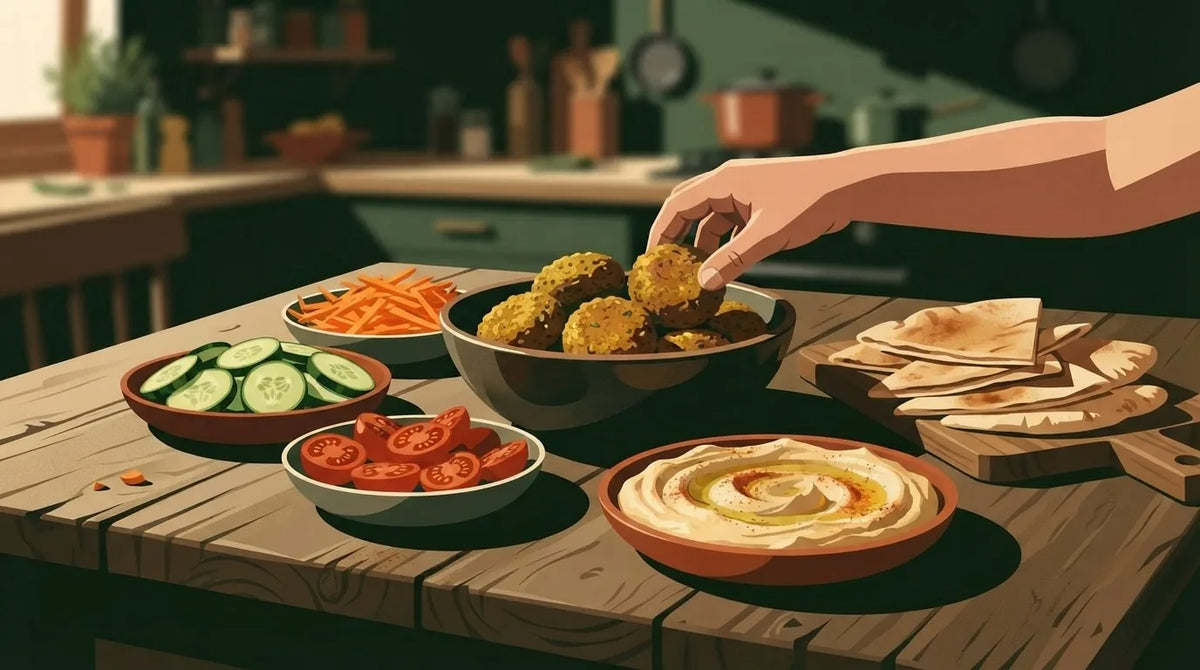
- Meera Sodha offers new food alongside familiar dishes and lets children pick their sides with falafel.
- Helen Goh describes her sons' differing preferences for chicken and broccoli and doesn't hide vegetables in meals.
When dealing with picky eating, you can choose between two simple approaches: prepare the snack and serve it, or set out several dishes within reach and let your child choose from them. The experiences of Tom Kerridge, Meera Sodha, and Helen Goh offer concrete examples of both approaches. Which one suits your family depends on how you want to serve the food—not on a promise that one method will change your child's eating habits.
For snack time, you can hand your child a prepared meal or set out several options for them to choose from. The experiences of Tom Kerridge, Meera Sodha, and Helen Goh show the difference between offering food, letting them choose from ready-made options, and involving them in preparation; however, this is not a guaranteed way to change eating habits.
What can picky eating mean at snack time?
At snack time, your child doesn't always have to decide on their own what to eat. You can offer or serve them a meal, or prepare several options for them to choose from. Tom Kerridge, who says that most children experience selectivity with food, also described in an interview with The Guardian his experience with his ten-year-old son, Acey.
When thinking about snack time, it's worth distinguishing three situations: an adult offers the child food, the child chooses from already prepared options, or the child gets involved in preparation. The last option is different from independently choosing from a ready-made snack. Some families may prefer that parents prepare and serve the food; others may like a spot with several prepared options.
Why might a child eat fruit they wouldn't choose on their own?
Tom Kerridge says his son Acey wouldn't pick fruit for himself, but he'll eat a sliced apple when his dad offers it. Similarly, a parent might present him with a prepared breakfast. So a child can accept food they wouldn't have chosen to initiate themselves.
Kerridge also mentions a smoothie his son started making from frozen mango and pineapple with coconut and cow's milk. It's an example from their household, not a suggestion that should be applied to every child. For a snack, a parent can simply offer a prepared portion; letting the child choose from available options is another approach.
This experience might remind a parent that a child doesn't always have to ask for food themselves. However, it doesn't mean every child will accept offered food or that it will change their food choices.
Is choosing food independently the same as preparing it together?
No. With independent choice, the child decides between dishes that an adult has already prepared. With shared preparation, they take part in how the food comes together. Based on his own experience, Tom Kerridge observes that his son is more likely to eat food he's helped make.

As examples, he mentions skewering peppers onto a kebab or assembling their own pizza. That's involvement in preparation, not choosing a ready-made snack. If your goal is simply for the child to pick from prepared options, cooking together isn't necessary for that.
Kerridge also describes weekend grilling, where the family places dishes in the middle of the table and everyone helps themselves. His son skips the salad but dips bread in olive oil. At such a table, there are more options, but the child still doesn't have to eat everything that's prepared. Even for a snack, you can choose whether to serve the options on the table or hand them out yourself.
How to Offer New Food Alongside Familiar Options?
Meera Sodha describes the different experiences of her daughters. Her older daughter, Arya, ate mostly what Sodha describes as "beige" foods until about age six. The younger one, Yogi, sometimes cried before trying something new. Sodha therefore tends to have a familiar option ready, such as scrambled eggs or cheese on toast, and serves the new dish alongside it.
With falafel, her children can assemble their own portion from various sides. Sodha mentions cucumbers, cherry tomatoes, grated carrots, hummus, cabbage, or mango chutney. The child thus chooses what to add to their meal. This example shows what choosing from offered options can look like — not an obligation to prepare the meal together.
Sodha also talks about gradually adding spices. Children may perceive flavors more intensely than adults; cumin or kimchi might seem strong to them. Her experience reminds us that a familiar option can remain on the table even when a parent offers something new.
Sodha also points out that labeling a child as picky can affect how they see themselves. A taste an adult finds mild may be perceived differently by a child. This is her perspective, not a shared view of all three cooks.
Why Might Children's Tastes and Textures Differ?
Helen Goh describes that her sons have different preferences for chicken and broccoli. One likes broccoli crunchy, the other softer, cooked a bit longer. So even with the same dish, taste or texture can be the deciding factor.

Goh prefers not to hide vegetables in food. She tells her sons what the dish contains because she doesn't want it to become a trick. This approach is her personal choice. It doesn't mean every family must serve food the same way.
When a child refuses a meal, Goh's examples show that their reaction may not be the same as a sibling's. When deciding on a snack, you can therefore consider not only what you offer, but also whether the prepared form of the food suits the child. However, from these family experiences, no universal rule for all children can be drawn.
Snack within reach or served by a parent: what works for you?
For snack time, you can prepare several options for your child to choose from, or you can select and serve the food yourself. Kerridge's experience shows that a child may eat an offered apple even if they wouldn't have picked fruit on their own. Sodha, in turn, describes her own portion made up of various sides, and Goh reminds us that children may have different preferences when it comes to taste or texture.
If you're considering where to serve the snack, available counter space in the kitchen can be a practical thing to think about, not a strict requirement. Letting your child choose doesn't mean they have to prepare the food themselves. You can equally stick to preparing and serving the portion yourself.
The most important decision is simple: do you want to offer your child a choice from what's already prepared, or will you pick and serve the food yourself? The family examples from these chefs show more than one way of serving food, not a guaranteed method for eliminating picky eating.
Frequently asked questions about picky eating
Should I serve the snack to my picky child or let them choose?
You can choose either approach depending on what suits your family. Tom Kerridge describes how his son eats a sliced apple when his father offers it to him, even though he wouldn't pick fruit himself. Another option is to prepare several dishes and let the child choose from them.
How to offer new food alongside something familiar?
Meera Sodha serves new food alongside a familiar option, citing scrambled eggs or bread with cheese as a backup example. With falafel, she offers children various sides they can use to build their own portion. These are her family's experiences, not a guaranteed method.
Is choosing from prepared options the same as cooking together?
No. When choosing, the child decides between already prepared options. When cooking together, they take part in making the food, for example by assembling their own pizza or skewering peppers onto a kebab, as Tom Kerridge describes.
Key takeaways
- A child may eat a sliced apple even if they wouldn't have picked fruit on their own.
- Choosing from prepared options is not the same as cooking together.
- Meera Sodha offers new food alongside something familiar and lets children choose sides with falafel.
- Helen Goh describes her sons' different preferences for chicken and broccoli and doesn't hide vegetables in food.
Practical Tips
- Consider whether you prefer to serve the snack yourself or set out several options for your child to choose from.
- When offering a new food, Meera Sodha's example shows the value of also leaving a familiar alternative on the table.
- When letting your child choose independently, separate the decision between ready-made options from the joint preparation of the meal.
- Treat having a dedicated snack spot as a practical option to consider, not a strict requirement.


