
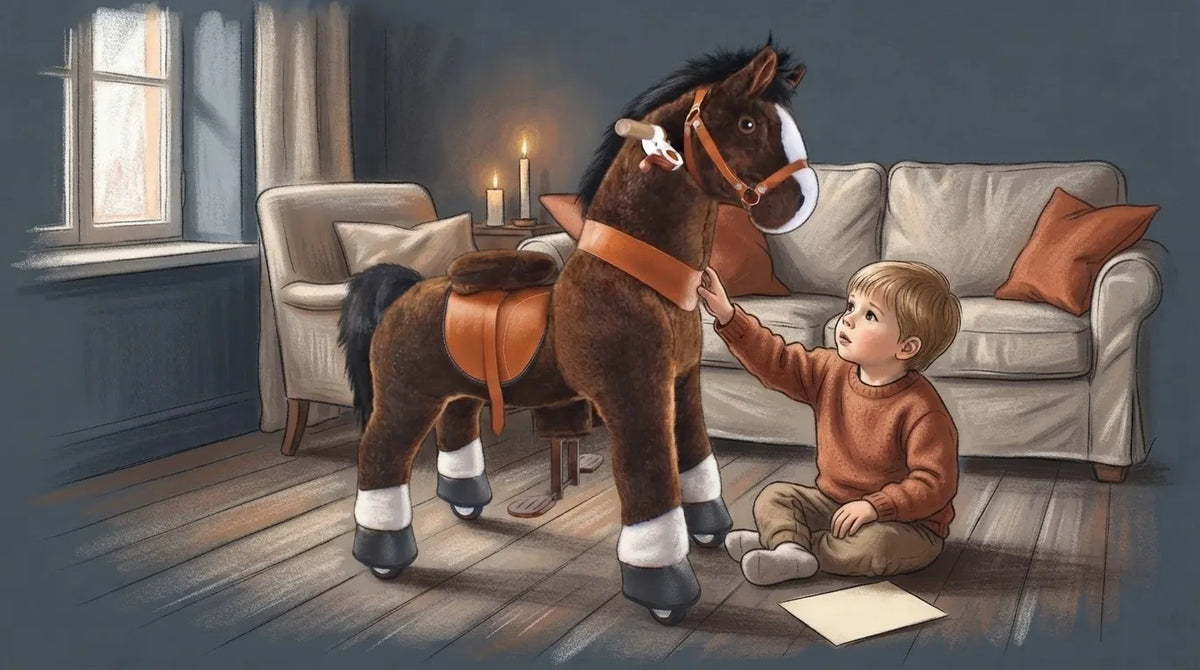
In short: A joint Ponycycle gift can make sense if the child truly wishes for it and the family voluntarily agrees on both the choice and the contributions. Instead of several separate gifts, loved ones can pool their contributions toward one exceptional item. Choose the gift with the child in mind and add a personal, handwritten note.
- First check whether the child really wishes for a Ponycycle; an agreement among adults alone is not enough.
- A joint contribution should be voluntary and the amount acceptable to everyone who takes part.
- One exceptional gift can be a better choice than several separate presents, if it matches the child's wish.
- Add a handwritten note explaining why you chose the gift or what you wish for the child.
One larger gift can be a more thoughtful choice than several smaller ones - if the child truly wishes for it and the family can agree on it. So with a joint Ponycycle gift, don't start with the question of who contributes how much, but with whether it's something the child would genuinely want to receive. Then clarify who will take part and what limits the joint contribution has.
A joint Ponycycle gift can make sense if the child truly wishes for it and the family voluntarily agrees on both the choice and the contributions. Instead of several separate gifts, loved ones can pool their contributions toward one exceptional item. Choose the gift with the child in mind and add a personal, handwritten note.
The Ponycycle collection at KiiDS.SHOP can serve as a concrete framework for this consideration. The product name alone, however, doesn't decide it: a joint purchase is worth considering when the gift matches the child's wish and the family wants to choose one exceptional item instead of several presents. The same principle as with other gifts helps in the choice: give it time, prefer quality over quantity, and don't forget the personal touch.
When Does a Joint Ponycycle Gift Make Sense?
A joint Ponycycle gift can make sense when the child wants one and several family members prefer a single shared choice over each bringing a separate gift. The agreement on a joint contribution should be voluntary and clear; the idea of pooling resources alone is not proof that a particular gift will be suitable for every child.

In its Christmas gift guide for mothers, grandmothers, aunts, and friends, The Guardian considers the idea that, for example, siblings or cousins might pool their contributions toward one exceptional item. This is a general idea of a joint gift, not a Ponycycle recommendation or a children's gift guide. The Guardian Before deciding, therefore, ask two questions: does the child actually want this kind of gift, and is choosing it together acceptable to everyone involved? If you don't know the answer to the first, try to discreetly verify the wish before the family starts negotiating contributions. The aim is not to surprise at all costs, but to choose something the recipient loves.
What to Clarify Before Contributing Together?
Before a joint purchase, agree on who wants to take part, what shared contribution is acceptable for the group, and who will be in charge of the actual selection. You don't need to find a universal formula for splitting the cost; what matters is discussing expectations in advance so the gift doesn't become a source of misunderstanding.

In practice, a short family agreement can help, for example in a message between parents, grandparents, siblings, or cousins. It's enough to clarify:
- who wants to contribute to the gift,
- whether everyone is talking about the same gift,
- what contribution is acceptable for each person,
- who will confirm the final choice and arrange the gift. If someone doesn't want to join in or can't, there's no need to make an issue of it. A joint gift should make choosing one exceptional thing easier, not create pressure on the family. And if no agreement is reached, you can still choose another way of giving.
Why Does It Make Sense to Prioritize Quality Over Quantity?
When it comes to a gift, its size or the number of packages isn't what matters most. A more useful guide is whether you tailored the choice to what the recipient likes and whether you gave them your attention. If the family agrees on one gift, there's no need to add more things just to have more.
This is especially important with a joint gift for a child. The name and appearance of a gift can seem appealing to adults, but what matters is whether the child wants it. If you're not sure, first check their interest; don't buy just because several relatives quickly agreed on one option.
The source guide concerns adult women, not children's gifts, so it cannot be used to infer specific features of Ponycycle or to claim that it is the right choice for every child. What can be carried over is the general principle: a thoughtful gift should be based on what the recipient will truly appreciate.
How to add a personal touch to a gift
Attach a short, handwritten note to the joint gift. It doesn't have to be long or perfectly worded: tell the child why you contributed to the gift, what you wish for them, or what you're looking forward to experiencing together. A personal dedication reminds them that real people are behind the gift, not just a group agreement.
The Guardian, in its guide, emphasizes that a handwritten message about why we value the recipient can mean more than the gift itself. It's a perspective on giving to an adult woman, but a personal touch also matters in a family gift to a child. Choose words that are yours — not a ready-made phrase anyone could write.
It's also worth avoiding a joke gift that would end up set aside or thrown away. The source also warns against gifts for women that only add to their household chores; if someone is to do such work, the giver should do it themselves. This example doesn't apply to choosing a Ponycycle, but it reminds us that a gift shouldn't be a hidden obligation for the recipient.
How to decide without unnecessary pressure
Consider a joint Ponycycle gift when the child wants one, several close ones want to contribute, and you can agree on both the choice and the contributions. If any of these conditions is missing, first clarify the child's wish or reach an agreement in the family; there's no need to decide just because Christmas is approaching.
A good choice doesn't have to be the biggest gift or the one with the most people involved. What matters more is that you chose something with the child in mind and gave them a personal message. That way, a joint gift becomes not just a practical agreement but also a shared gesture from the family.
Frequently asked questions about a joint gift
Can siblings or cousins contribute to one Christmas gift?
Yes. A family can decide to pool contributions for one exceptional item instead of several separate gifts. Before that, however, clarify who wants to take part, whether everyone agrees on the choice, and what contribution is acceptable for each person. The agreement should be voluntary, not a source of pressure.
How to find out if a child wants a Ponycycle?
Try to verify the wish before the family agrees on a joint purchase. You can ask the child directly or confirm their interest through a parent if the wider family is preparing the gift. If you're not sure they would want such a gift, clarify it first; an agreement among adults alone isn't enough.
What to write in the message accompanying a joint gift?
Tell the child why you decided to give them this item, what you wish for them, or what you are looking forward to together. The message doesn't have to be long. A personal, handwritten dedication can give the gift a meaning the object itself doesn't have, and it shows the child that you were thinking of them specifically when choosing it.
Key takeaways
- First, verify whether the child really wants a Ponycycle; an agreement among adults alone is not enough.
- A joint contribution should be voluntary and the amount acceptable to everyone who takes part.
- One exceptional gift can be a better choice than several separate gifts, if it matches the child's wish.
- Add a handwritten note explaining why you chose the gift or what you wish for the child.
Practical tips
- Set up a single shared message for those considering a contribution, so the selection and agreement don't get scattered across separate conversations.
- Before purchasing, decide who will confirm the final choice and secure the gift.
- If you're not sure about the child's wish, verify it before relatives agree on contributions.
Explore the Ponycycle topic
If the family is considering a joint gift, the Ponycycle collection at KiiDS.SHOP offers a concrete framework for further clarifying the choice.


