
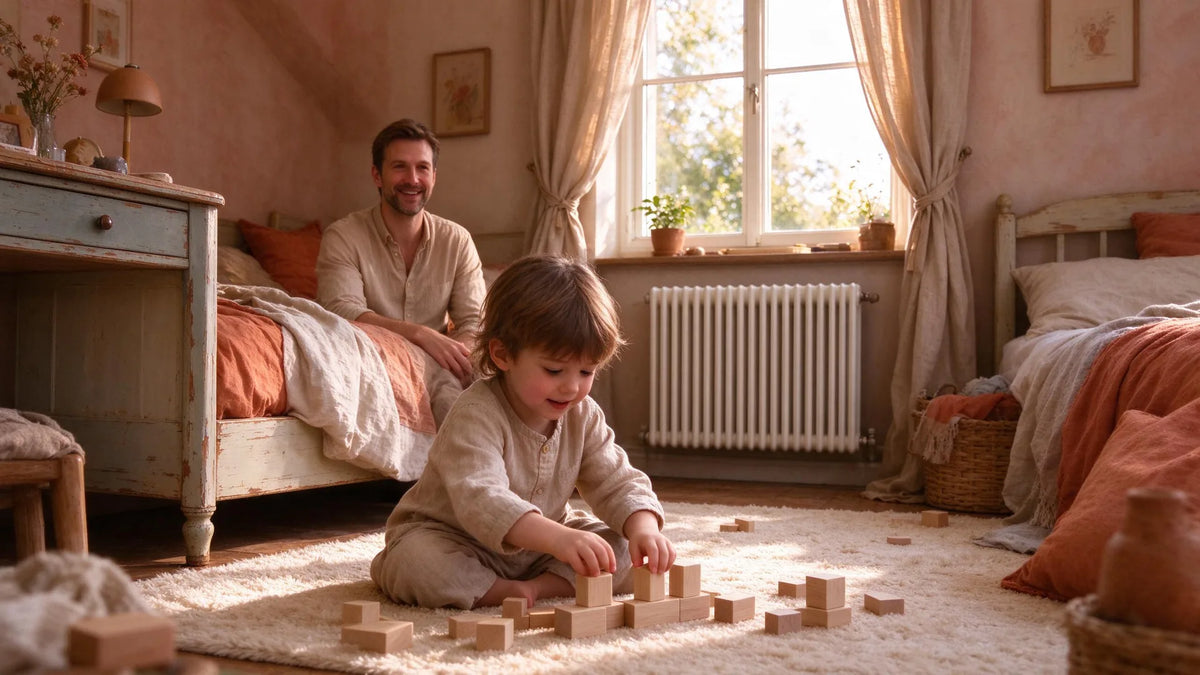
In short: When setting up a child's room, first consider how it is used for play, rest and everyday activities, and assess the free space around the radiator. Only then decide where the larger pieces of furniture should go. Furniture, curtains and a drying rack can restrict airflow and hinder the spread of heat around the room.
- Before placing larger furniture, assess the room's everyday use and the position of the radiator.
- Furniture, curtains and a laundry drying rack can cover the radiator, restrict airflow and slow the spread of heat.
- Don't guess at a universal distance from the radiator; the source doesn't state one. Focus on whether it remains uncovered.
- Bear in mind that the room's layout may change according to the child's needs and the family's routine.
- Bubbling can indicate an airlocked radiator that needs bleeding.
How should you arrange furniture so that a child's room works well for both play and rest while the radiator stays uncovered? When planning, start with how the space is used, and only then look for a place for the larger pieces of furniture. A covered radiator restricts free airflow, so heat may not spread around the room as it could. This matters especially when the room changes during the day from a place to play into a space to rest.
When setting up a child's room, first consider how it is used for play, rest and everyday activities, and assess the free space around the radiator. Only then decide where the larger pieces of furniture should go. Furniture, curtains and a drying rack can restrict airflow and hinder the spread of heat around the room.
So don't automatically place furniture according to where it fits most easily. First notice where the radiator is and what is around it; then plan the rest of the furnishings. The source doesn't state a specific required distance, so there's no point inventing a universal gap.
How will a radiator in a child's room behave in everyday use?
A child's room usually serves more than one purpose: the child plays, rests, and goes about daily activities there. When planning, first clarify how the room is used, and alongside that assess whether the area around the radiator will stay clear. Only then decide on the placement of larger pieces of furniture.
It's practical to think of the room as a whole, not just individual pieces of furniture. A spot that at first glance suits a bed or storage furniture may also cover a radiator or encroach on the space used for play. So the question isn't just "Where will this piece fit?" but also "What will happen to the rest of the space when we put it there?"
This order of decision-making doesn't mean there's one right layout for every child's room. It simply means that when choosing a spot for larger furniture, you need to account for how the family actually uses the room, and not leave the area around the radiator aside.
Why does furniture near a radiator affect heat circulation?
Furniture, curtains, and a clothes drying rack can all cover a radiator. According to a warning from the Aktuality portal, such obstacles restrict the free flow of air, and heat then doesn't spread through the room. So it's not just about whether you can reach the radiator, but also about what stands or hangs around it.

In a child's room, this problem can arise during ordinary furnishing: furniture takes up space that would otherwise stay free, or a curtain or drying rack ends up next to the radiator. The source doesn't state how much the temperature changes or what radiator output is achieved. What matters is exactly what it does state: an obstacle restricts air flow and prevents heat from spreading through the room.
When deciding, therefore, consider not only the footprint of the furniture but also whether the resulting arrangement will cover the radiator. There's no need to turn this into a complicated technical calculation. Before final placement of larger pieces, simply notice whether free space remains around the radiator and whether a curtain or drying rack is covering it.
What to consider before placing larger furniture?
First, decide which parts of the room are used for play and which for rest, then include the radiator's position in your planning. This order helps you see possible compromises before you decide where to place larger pieces of furniture. The source does not specify an exact distance from the radiator, so follow whether furniture, curtains, or a drying rack cover it.

As you think it through, you can go over these questions:
- Where does the child most often play in the room, and where do they rest?
- Which larger pieces of furniture still need their place?
- Will the radiator remain uncovered after they are placed?
- Does a curtain or a drying rack with laundry reach into its surroundings? The answers do not have to lead to a perfectly symmetrical layout or a single ideal solution. They will, however, help you notice where the room's everyday use meets the need to keep the radiator clear. That way, you are not planning play and rest space separately from how heat can spread.
How to plan a room when the family's needs change?
The layout of a children's room does not have to stay the same. As the child grows, their needs and family routines change, and the family can adapt the layout to how it uses the living space. When planning, therefore, count on the fact that today's arrangement may not be final.
This is especially useful when you are deciding where to place a larger piece of furniture. Besides how it fits into the room's current use, also consider whether the arrangement can be adjusted later without again covering the area around the radiator. This does not mean looking for a specific type of furniture or predicting the child's exact future routine. It is a simple planning rule: the space should serve the family now and at the same time does not have to be permanent.
If you are adjusting the room, go through the same questions again as when you first furnished it: how it is used, where the radiator is, and whether anything covers it. A change in how the child spends time in the room can be a reason to rethink the furniture layout, but not to forget the clear area around the radiator.
What could bubbling in a radiator mean?
If a radiator makes a characteristic bubbling sound, it may be a sign that it has air in it and needs bleeding. This is a different matter from furniture or a curtain nearby: obstacles restrict airflow and the spread of heat in the room, while bubbling is cited by the source as a possible symptom of trapped air.
This note does not replace room planning. When arranging furniture, focus on making sure larger pieces, curtains, or a drying rack do not cover the radiator; if you hear bubbling, treat it as a separate prompt to pay attention to the radiator's condition.
Key takeaways
- Before placing larger furniture, assess both the room's daily use and the radiator's position.
- Furniture, curtains, and a laundry drying rack can cover the radiator, restrict airflow, and slow the spread of heat.
- Do not assume a universal distance from the radiator; the source does not state one. Focus on whether it remains uncovered.
- Bear in mind that the room layout may change according to the child's needs and family routine.
- Bubbling may indicate a radiator with trapped air that needs bleeding.
Practical tips
- Before moving furniture, sketch the radiator's position and the parts of the room used for play and rest; you will spot possible conflicts faster.
- Whenever you change the layout, check whether a piece of furniture, curtain, or drying rack has been added near the radiator.
- When the way your child uses the room changes, reassess the layout as a whole, not just the spot for one piece of furniture.


