
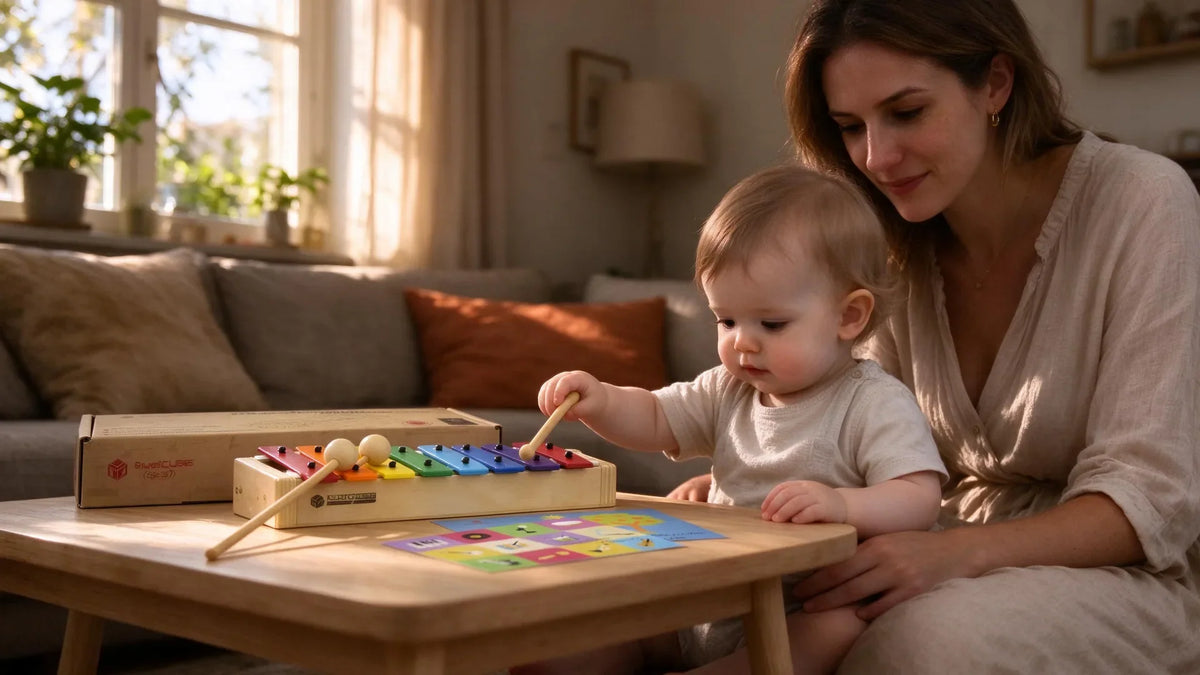
In short: For a toddler, choose a simple instrument they can grasp, hit, or shake. Examples include a rattle, a shaker, and a xylophone; for children from three years old, the source also mentions a recorder and a ukulele. Digital keyboards represent a different option for older children, with more flexible requirements for space, volume, and adjustment.
- When choosing for a toddler, consider whether they can comfortably grasp the instrument, hit it, or shake it.
- Age-based examples include an eight-note xylophone or an egg shaker for a one-year-old, several tuned and rhythmic options for a two-year-old, and a recorder or ukulele for a three-year-old.
- With a toddler's instrument, look for a tuned sound, material, size, and sturdy construction; for a one-year-old, the source emphasizes supervision.
- Digital keyboards are a separate option for older children; the available excerpt mentions the Yamaha DGX-670 and Yamaha YDP-S56, but does not provide a full comparison of models.
When choosing a first musical instrument, start by looking at what your child can comfortably explore right now. Then consider how much space you want to set aside for the instrument and whether you are looking for something for current discovery or an instrument for longer-term use.
For a toddler, choose a simple instrument they can grasp, hit, or shake. Examples include a rattle, a shaker, and a xylophone; for children from three years old, the source also mentions a recorder and a ukulele. Digital keyboards represent a different option for older children, with more flexible requirements for space, volume, and adjustment.
For a toddler, simple instruments for grasping, hitting, or shaking tend to be suitable. Digital keyboards represent another option, rather for an older child: according to the available information, they are more flexible in terms of space than a piano and can be adjusted to the child's age and finger strength. However, choosing an instrument is not a guarantee of musical or developmental benefit.
How to choose a first musical instrument by age
Choose a first musical instrument based on how your child can handle it. For children aged one to three, rattles, shakers, small percussion instruments, and xylophones are worth considering; for older children, you might also consider a digital keyboard.
A guide to instruments for toddlers recommends simple and durable instruments that produce a real tuned sound, such as a wooden xylophone, a shaker, or small percussion. This is a useful distinction when choosing: a shaker or rattle offers a simple sound experience, while a xylophone has tuned notes. The difference in sound alone is not a reason to promise a specific outcome.
According to the same guide, children aged one to three can explore an instrument by striking, shaking, or tapping it. So start with what your child can grasp and try without unnecessary effort, and only then choose a specific type.
Which musical instrument should you choose for a child aged one to three?
The examples change with what the child can do with the instrument: from shaking and striking in a one-year-old to a first wind or string instrument from around three years of age. Treat the ages given as indicative examples, not as a mandatory progression.
- For a one-year-old: an eight-note xylophone with beech bars and two wooden mallets, or an egg shaker with non-toxic filling. A rattle is also among the simple options. When using instruments at this age, the source emphasizes supervision and large, rounded, non-toxic objects.
- For a two-year-old: a thirteen-note xylophone, a set with a glockenspiel, shaker and tambourine, or a steel tongue drum. These are options with different ways of exploring sound; choose according to what the child can comfortably grasp and use.
- For a three-year-old: a beginner recorder or a 21-inch soprano-sized ukulele with nylon strings. There is no need to change the instrument just because the child has reached another age milestone. If shaking a shaker or striking a xylophone suits them better, that is a relevant guide when choosing. When planning space, it also helps to distinguish a small percussion aid from a larger instrument you want to keep at home for longer.

What should you focus on when choosing a musical instrument for a toddler?
When choosing an instrument for a toddler, consider tuned sound, material, size, and sturdy construction. The instrument should match how the child can handle it; with a one-year-old, supervision is also important.
- Sound: a xylophone has tuned bars, while a shaker, rattle, and other small percussion are a simple choice for rhythmic sound exploration. Decide based on what type of sound you want to offer the child.
- Material: examples cited in the source include beech wood with water-based paint for the xylophone and non-toxic filling in the egg shaker. For a specific product, follow its own description; these examples are not a claim about all instruments.
- Size: choose an instrument appropriate to what the child can grasp and use. For a one-year-old, the source specifically mentions large, rounded, and non-toxic instruments and adult supervision.
- Durability: sturdy construction is a practical criterion for an instrument that a small child handles. However, it does not automatically guarantee safety; always assess the specific product and its intended use. You can also start with a small set. The source states that two or three items may be enough: one tuned instrument, such as a xylophone, and one free percussion tool, such as a shaker or drum. So you don't have to choose a large set if you want to first find out what the child reaches for on their own.
What musical instrument is suitable for a one-year-old?
Examples include an eight-note xylophone with beech bars and two wooden mallets, an egg shaker with non-toxic filling, or a rattle. Supervision is required during use; for one-year-olds, the source emphasizes large, rounded, and non-toxic instruments.
How many instruments are enough for a toddler?
The source states that two or three items may be enough. One option is to combine a tuned instrument, such as a xylophone, with a free percussion tool, such as a shaker or drum.
When should you consider a digital keyboard for children?
A digital keyboard is a different option for older children if you want a more space-flexible alternative to a piano. According to the available guide, it can be adapted to the child's age and finger strength and played at different volumes or through headphones; it also states that digital keyboards cost less than a piano.

The available excerpt from the keyboard guide mentions the Yamaha DGX-670 for children aged six and up and children who may outgrow it, and the Yamaha YDP-S56 as a furniture-style digital piano. These mentions are not enough for a full comparison of keyboards by features, performance, or suitability for different age groups. There is therefore no reason to add further models or to build a ranking from them.
When deciding, separate two questions: what the child can explore today, and how much space you want to set aside for the instrument over the longer term. For a toddler, a rattle, shaker, xylophone, or small percussion instrument may be the first choice. Consider a digital keyboard as a separate option for an older child if its space solution and way of playing suit you.
Are digital keyboards also suitable for small children?
The available information mentions the Yamaha DGX-670 for children aged six and up. The guide also mentions adapting the keyboard to the child's age and finger strength, but the provided excerpt does not contain enough data for a full comparison of models or for a recommendation for every small child.
Key takeaways
- When choosing for a toddler, consider whether they can comfortably grasp, strike, or shake the instrument.
- Examples by age include an eight-note xylophone or an egg shaker for a one-year-old, several tuned and rhythmic options for a two-year-old, and a flute or ukulele for a three-year-old.
- For a toddler's instrument, look for tuned sound, material, size, and sturdy construction; for a one-year-old, the source emphasizes supervision.
- Digital keyboards are a separate option for older children; the available excerpt mentions the Yamaha DGX-670 and Yamaha YDP-S56, but does not provide a full comparison of models.
Practical tips
- Before choosing, consider what your child can explore now and how much space you want to set aside for the instrument.
- With age examples, go by your child's ability to grasp and use the instrument, not just their age.
- If you're comparing digital keyboards, treat the available information as partial; it doesn't include a complete overview of models.


