



Why This Wooden Aid Builds Confidence in a Child Sooner Than Words?

Imagine a situation every parent knows. Your child is trying to climb onto the sofa. Your instinct tells you to scoop them up under the arms and “help” them up. But what if that well-intentioned assistance is actually the biggest obstacle to building their true inner strength? Most people don’t realize that motor development isn’t just about muscles, but about a deep psychological process where self-confidence forms even before a child says their first word.
True self-assurance doesn’t come from parents’ applause after a successful attempt. It’s born in quiet concentration, as a child independently assesses risk, tests the stability of their legs, and discovers where their abilities end and the challenge begins. This is where the philosophy of Emmi Pikler comes into play, believing that a child knows best when they are ready for the next step. The Pikler triangle isn’t just a piece of furniture; it’s a safe space for this invisible growth, where a child explores the world at their own pace and with a deep sense of competence.
The Philosophy of Climbing and Respect for Developmental Rhythm
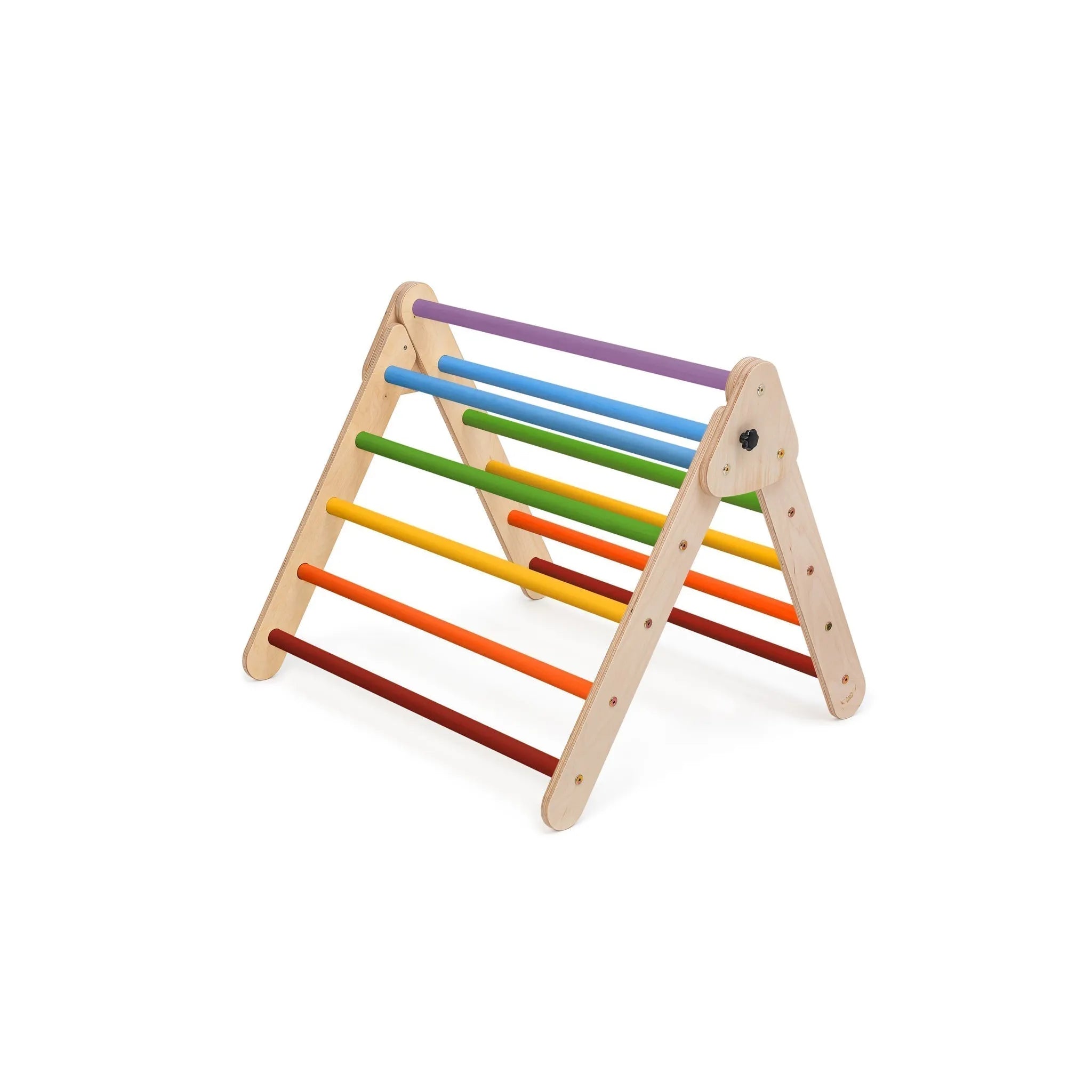
When you look at the Pikler triangle from KateHaa, you see a simple, almost minimalist construction. But for a baby from six months old, it’s Mount Everest in the living room. The whole idea is based on respect for the natural pace. If a child doesn’t climb the triangle today, they’ll climb it tomorrow. The important thing is that they do it themselves, without you placing them there. This approach avoids frustration and teaches the child that their body is capable and reliable. This approach is in stark contrast to mass-produced plastic toys that simply entertain the child passively with lights and sounds. Here, the child is both the director and the main character. When they begin their first climbs, the triangle provides a firm support that ordinary furniture, such as unstable chairs or slippery mattresses, often lacks. It’s an investment in healthy movement that will pay off in a child who knows their limits and doesn’t take unnecessary risks on the playground, because they’ve built their stability in a safe home environment. Similar to the Montessori Lion Edmund board, this tool also motivates exploration through touch and movement. The child learns to perceive distance, depth, and grip without anyone dictating how to do it. The transition from horizontal to vertical movement is key for the child’s psyche. When a child grabs the first rung, they not only strengthen their fingers, but also build neural pathways connected to spatial orientation. The Pikler triangle is designed to stimulate these pathways naturally. The distance between the rungs is precisely calibrated to suit small feet, minimizing risk and maximizing the feeling of success.
Benefits for Your Child’s Confidence and a Break for You
Do you know that feeling of constantly needing to be right behind your child, repeating “be careful”? With this, you’ll experience something different – less hand-holding and more trust. When a child realizes they can climb to the other side on their own, their confidence soars. This psychological effect is far more powerful than any verbal encouragement. A child doesn’t need to *hear* they’re capable; they *feel* it in every muscle. They see the world from a different perspective, from the height they’ve achieved through their own effort. For you as a parent, this means precious moments of peace. Because the design prioritizes safety without needing constant assistance, you can sit back with a coffee and simply watch this fascinating process of discovery. Your child learns independence while you have free hands. It’s a similarly transformative experience as discovering why children choose this particular spot in the room from as early as one year old, where they feel safe and capable. Your role shifts from “protector against every fall” to “supportive observer,” which builds a healthier relationship based on mutual respect. This saved time isn’t just about parental relaxation; it’s about creating an environment where a child isn’t under constant supervision and correction. When a child makes a mistake and slips a step, they learn to correct their own movements. This self-correction is fundamental for future emotional stability. If a child knows they can overcome a physical challenge, they’ll have more faith in themselves when facing other life challenges.
Playtime Possibilities: An Indoor Playground, Even on Rainy Days
It’s pouring outside, the playgrounds are soaked, and your child has energy to burn. Sound familiar? That’s when a Pikler triangle becomes a lifesaver for your home. It’s a year-round indoor play space that provides the right kind of tiring activity. Instead of passively watching screens, it engages gross motor skills, coordination, and creativity. Physical activity indoors doesn’t have to mean jumping on beds or running around the dining table.
In seconds, the triangle can become a fort, a dollhouse, or a secret hideaway. Simply drape a blanket over it and suddenly you have a magical cave in the room. When you have visitors with children, the triangle naturally becomes the center of social interaction. Children learn to take turns, cooperate, and conquer the “peak” together. Just like Shappy children's seating and play sets for active kids, this tool also encourages open-ended play where the rules are determined by a child’s imagination, not an instruction manual. Imagine a Saturday morning when the weather outside is frightful. Thanks to the triangle, your child can overcome obstacles, slide, and practice balance all in the warmth of your home. By physically tiring themselves out, their sleep rhythm and overall well-being also improve. It’s a way to keep a child’s curiosity alive even on days when the world outside the window is gray and unwelcoming.
Aesthetic and Functional Variations: Colors and Ramps
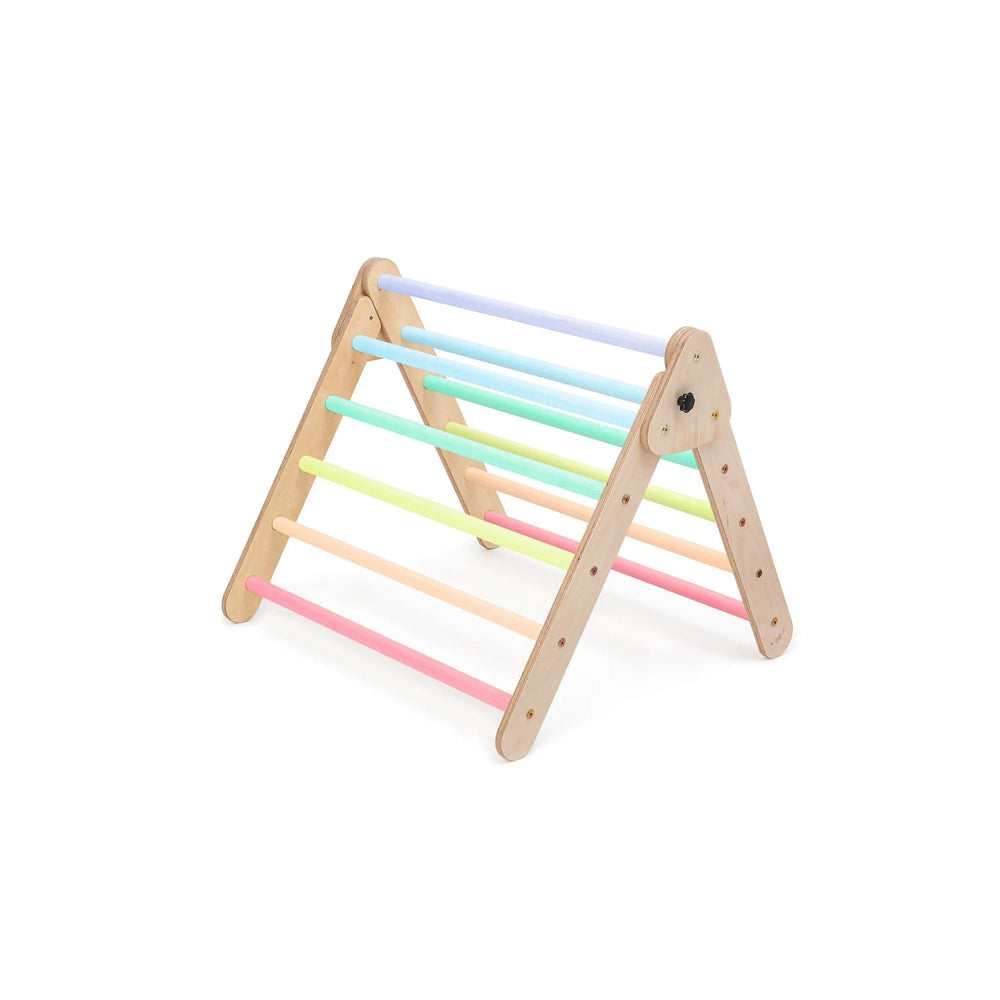
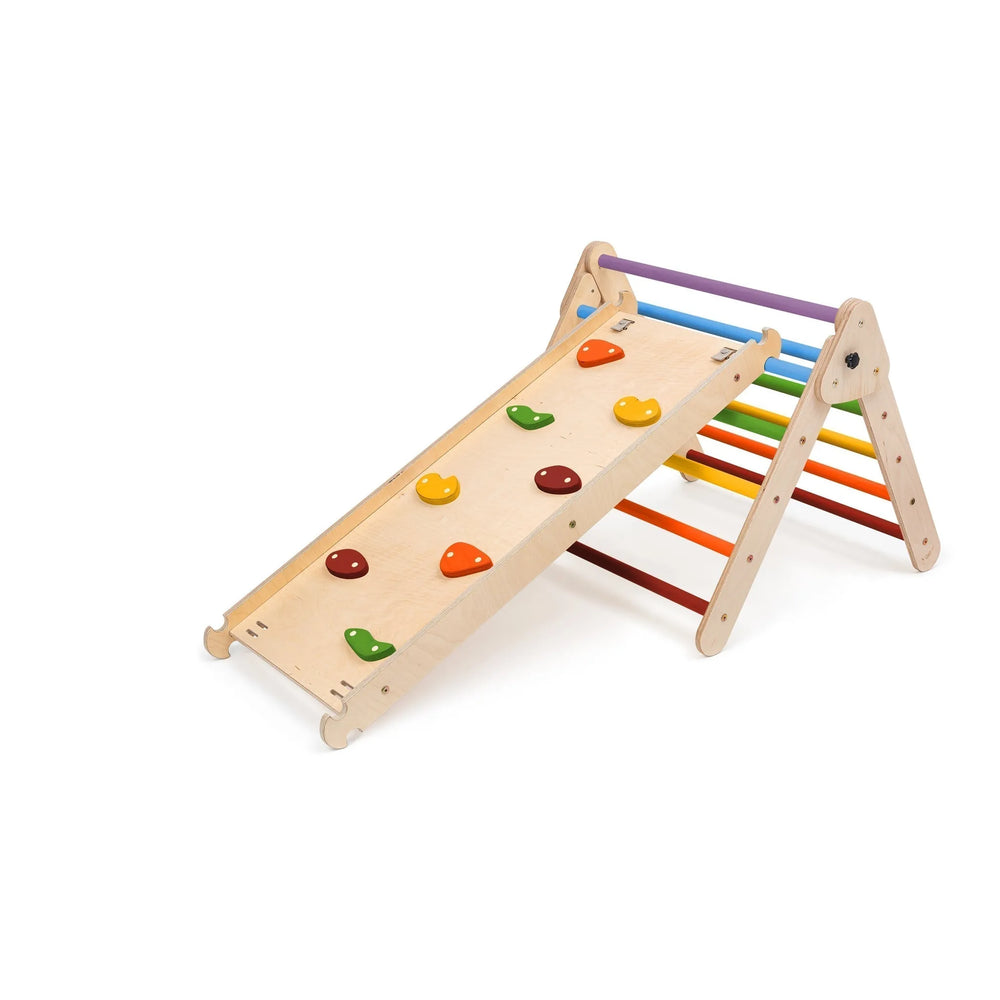
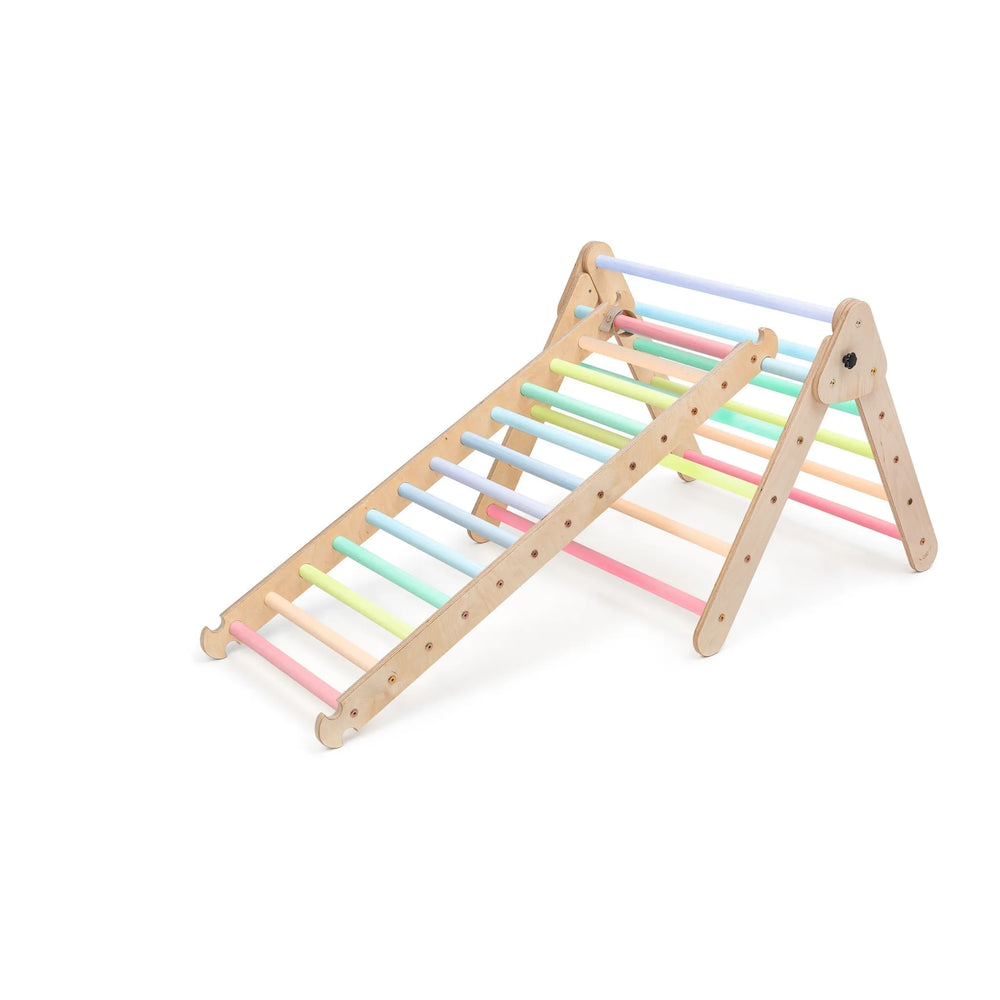
KateHaa understands that a child’s room is part of your carefully curated home, which is why the triangle comes in three aesthetic designs: Natural, Pastel, and Rainbow. Whether you prefer clean natural wood or soft, soothing colors, it will blend into your interior as a design piece, not as a garish plastic intruder. But the real fun begins with the extensions, which take play to a new level. You can add a climbing or ladder ramp to the triangle. This serves not only as a way up, but when simply flipped, as a fun slide. This connection of the ramp to the main triangle creates a complex obstacle course that dynamically grows with the child. If you already have other elements at home, for example, if you’re curious why this wooden rocker changes the way children develop, the triangle with a ramp will be their perfect functional partner. The ramp attaches to the triangle securely and intuitively. You can set it to different heights, changing the slope of the slide or the difficulty of the climb. For the youngest children, place it on the lowest rung to create only a gentle slope. As the child grows and gains confidence, move the ramp higher. This system ensures that the toy never stops being a challenge. Moreover, the ramp’s dual use (a smooth slide on one side, climbing stones or a ladder on the other) saves space and offers twice the fun.
What You Need to Know: Space and Specifications
Before you fall in love with this indoor play gym, let’s talk honestly about space. While the triangle is foldable and beautifully designed, your child needs at least a 6.5ft x 6.5ft area for safe and comfortable play. This space is essential for them to move freely around the triangle, safely slide down the ramp, or approach the ladder from any side. If you live in a studio apartment or a very small space where every inch counts, this product might feel restrictive rather than beneficial. The age range is quite broad: from around 6 months to 5 years. It begins with gentle pulling up and progresses to acrobatic feats from a preschooler. However, once your child exceeds five years of age or reaches a height where the triangle feels too small, it loses its developmental purpose. It’s important to respect these limits to ensure play remains safe. The quality craftsmanship from European manufacturer KateHaa guarantees that even after years of intensive use, the triangle will be in excellent condition for a younger sibling. When planning its location, consider the flooring. While the triangle is stable, it’s best to place it on a rug or play mat to cushion falls. That 6.5ft x 6.5ft of open space isn’t just a technical specification—it’s a zone of freedom where your child can safely fall and get back up, which is an integral part of the learning process.
An Investment in Long-Term Development
When choosing furnishings for a child’s room, we often weigh price against value. A Pikler triangle isn’t a toy for just one season. It’s a tool that adapts to a child’s changing needs. For an infant, it’s support during their first attempts to stand; for a toddler, it’s a challenge to overcome a fear of heights; and for a preschooler, it’s a base for complex role-playing games. This versatility ensures the product won’t end up gathering dust in a corner.
Moreover, physical activity on the triangle directly impacts the development of gross motor skills, which is the foundation for all later sporting activities. A child who masters coordination on a safe indoor climbing frame will have a much easier start when learning to ride a bike or participating in team sports. It’s an investment in a healthy lifestyle from a young age, teaching a child the joy of movement. When a child understands that their body can overcome an obstacle, they carry that feeling of competence into other areas, such as trying new foods or making friends.
The KateHaa Brand: A Mark of European Quality
Choosing toys is often about quantity these days, but the Pikler triangle from KateHaa is about quality that will last for generations. As a leading European manufacturer, KateHaa insists on certified materials and precise hand-sanding. Every edge is rounded, every surface is smooth to the touch, so you don’t have to worry about splinters or an unstable structure. It’s a piece of honest craftsmanship that respects your child’s health and the aesthetics of your home. The birch plywood used is not only ecological but also exceptionally resistant to mechanical damage. The paints and varnishes are water-based, meaning they are safe even if your child decides to taste the rungs. This level of detail is what sets premium European products apart from mass production. If you’re looking for a way to support your child’s natural curiosity, courage, and motor skills, the KateHaa Pikler triangle is the best path forward. It’s not just about movement; it’s about that unmistakable feeling of “I can do it myself” that a child will carry from the living room throughout their life. Give them that moment of triumph over themselves, which no verbal praise can ever fully replace. True self-confidence begins where your help ends and a child’s courage begins. It’s a gift of independence that will stay with the child long after they’ve physically outgrown the triangle.