
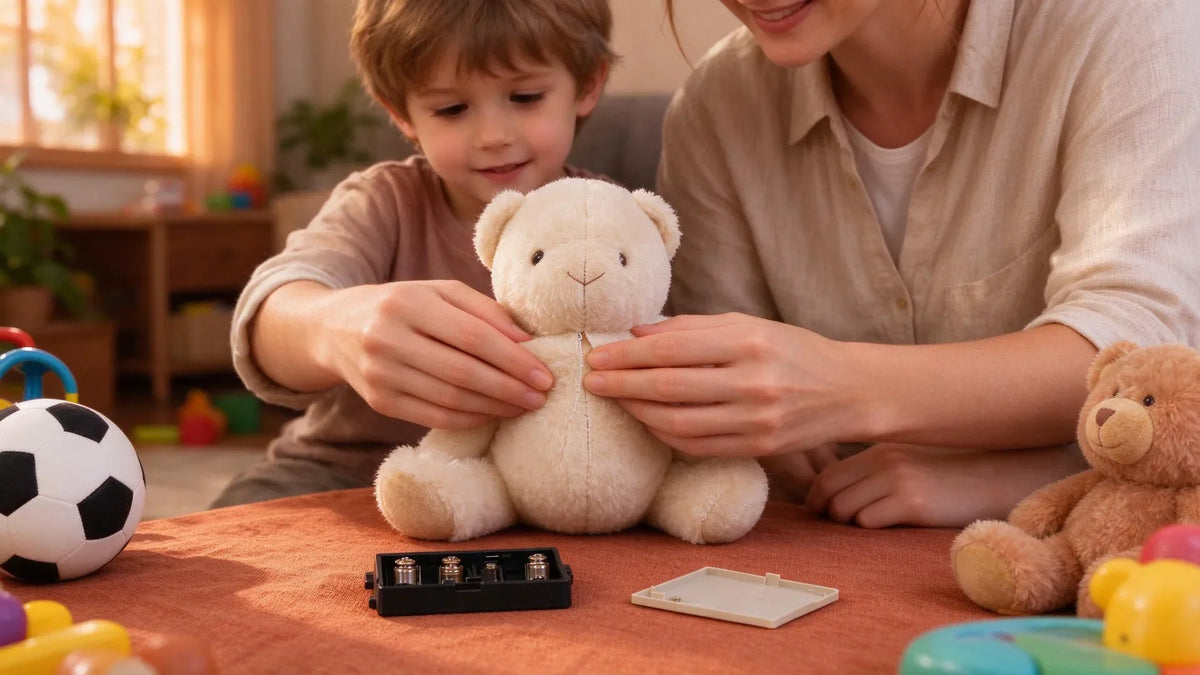
In short: Before using a second-hand toy again, inspect it and check the material, surface, seams, loose parts, battery compartment and electrical components. On older soft plastic, look out for a strong odour and a sticky or greasy surface; on wood, for peeling paint or damage. Neither the CE mark nor a well-preserved appearance guarantees that an older toy meets today's requirements.
- Older soft plastic with a strong odour or a sticky or greasy surface calls for extra caution.
- Gently pull on the toy's parts and check the seams; a loose component or damage is a reason not to give the toy to your child.
- With battery-powered toys, verify that the cover is secure and that the cables, charger and electrical parts are undamaged.
- Treat the CE mark as a checkpoint, not as a guarantee that an older toy complies with today's requirements.
- For children under three, do not choose toys with small parts that could cause choking.
Before using a second-hand toy again, inspect it and check the material, surface, seams, loose parts, battery compartment and electrical components. On older soft plastic, look out for a strong odour and a sticky or greasy surface; on wood, for peeling paint or damage. Neither the CE mark nor a well-preserved appearance guarantees that an older toy meets today's requirements.
Why to inspect used toys before using them again
With a used toy, check the material and surface, then the integrity of joints and small parts, and finally the battery compartment or electrical elements, if the toy has them. Inspect it, press it, feel it, and gently pull on the parts. At the same time, consider whether it is suitable for your child's age. Reuse can give a quality toy another life, but not every older piece is suitable for further play.
The topic was also opened by the news that Myrorna named a toy the secondhand Christmas gift of the year 2026. The industry welcomes reuse but warns that older toys may have worn or loose parts and may not meet today's safety requirements. (Lek- och Babybranschen) When deciding, it is therefore not enough that the toy looks clean and well-preserved. What matters is its actual condition, material, and whether its individual parts stay in place. An inspection helps you notice obvious problems, not confirm chemical composition or guarantee that the toy meets all current requirements.
Why a well-preserved appearance and even the CE mark may not be enough
Safety requirements change over time. In 2013, stricter rules were introduced in the EU that restricted the use of several chemical substances in toys. Older toys, especially those made of soft plastic, may therefore contain substances that are no longer permitted in new toys. This does not mean that every older piece contains them.
A toy may look undamaged and well-preserved, yet still may not correspond to today's safety requirements. The CE mark should be perceived similarly: choose toys bearing this mark, intended for the European market, but do not consider it a guarantee that an older toy meets today's requirements.
This is an important distinction in any second-hand inspection. A visual inspection and the CE mark are useful points in decision-making, not proof of all the toy's properties. If you have doubts about a particular piece, do not mistake them for certainty just because the toy once served without problems.
How to check the material and surface of a used toy
When examining the material, pay particular attention to signs of aging and damage. Inspect and feel older soft plastic thoroughly. If it has a strong odor or feels sticky or greasy to the touch, the source recommends extra caution; such characteristics may point to a possible issue, but they do not on their own determine the exact chemical composition.

For a wooden toy, check both the paint and the surface itself. Peeling paint or damaged material are reasons not to choose the toy for further use. It is not just about whether the toy looks nice: a damaged surface can be part of an overall deteriorated condition.
During the inspection, do not focus on just one obvious flaw. Look over the toy from different angles and notice changes in the material, the seams, and the places where individual parts join. If there is visible damage or anything is coming apart, take it seriously.
How to check joints, seams, and loose parts
Inspect the toy thoroughly, press it, feel it, and gently pull on its parts. This way you can find out whether any component is coming loose. Do not pull forcefully: the goal is to notice the toy's condition, not to test how much stress it can withstand.
Check whether the toy is complete, whether small parts are coming loose, and whether any seams are split or damaged. For soft toys, pay attention to the seams as well as the parts attached to the toy. If a part gives way under a gentle pull, or is already visibly loose, the toy may not be suitable to pass on to a child.
Keep the child's age especially in mind. Small children, particularly children under three, should not play with toys that contain small parts and could cause choking. Even if the toy otherwise appears undamaged, its age suitability remains a separate decision point.
What to check on batteries and electrical parts
If a toy has batteries or electrical components, check that the battery compartment is securely fastened and that the cables, charger, and electrical parts are not damaged. These components can also deteriorate with age. A toy that looks well preserved on the outside may therefore not have a safe battery compartment or undamaged electrical parts.

Check whether the cover stays in place and whether there is any visible damage to the cables, charger, or other electrical parts. If any part is not intact or the cover is not securely fastened, do not consider the toy suitable just because its other parts look fine.
The check should also include other elements that may pose a risk. Watch for strong magnets that could come loose, and for long ribbons or cords. If a magnet can detach or the toy has long straps or cords, that is a reason for caution; the source identifies these risks as serious.
When a toy can get a second life
Choose a toy based on its condition as well as its age suitability. Inspect the material and surface, check the seams and loose parts, the battery compartment and electrical parts, and don't forget magnets, long cords, and small parts. The CE marking intended for the European market is a useful checkpoint, not confirmation that an older piece meets today's requirements.
Reuse can be worthwhile: many toys are high quality and can bring joy to several generations. At the same time, there is no need to give every old toy a new life. Decide based on what you actually see and feel with the specific piece, and when in doubt, prioritise suitability and condition over keeping the toy at all costs.
Key Takeaways
- Older soft plastic with a strong odor or a sticky or greasy surface calls for extra caution.
- Gently pull on the toy's parts and check the seams; a loose part or damage is a reason not to hand the toy to your child.
- For battery-operated toys, verify that the compartment cover is secure and that the cables, charger, and electrical parts are undamaged.
- Treat the CE marking as a checkpoint, not as a guarantee that an older toy meets today's requirements.
- For children under three, avoid toys with small parts that could pose a choking hazard.
Practical Tips
- When picking up a toy in person, inspect it step by step: first the surface and material, then the joints, and finally the battery or electrical area.
- If the toy has several types of parts, also check the seams, attached components, magnets, ribbons, and cords.
- When assessing, separate what you can determine by sight and touch from what such an inspection cannot confirm.


