
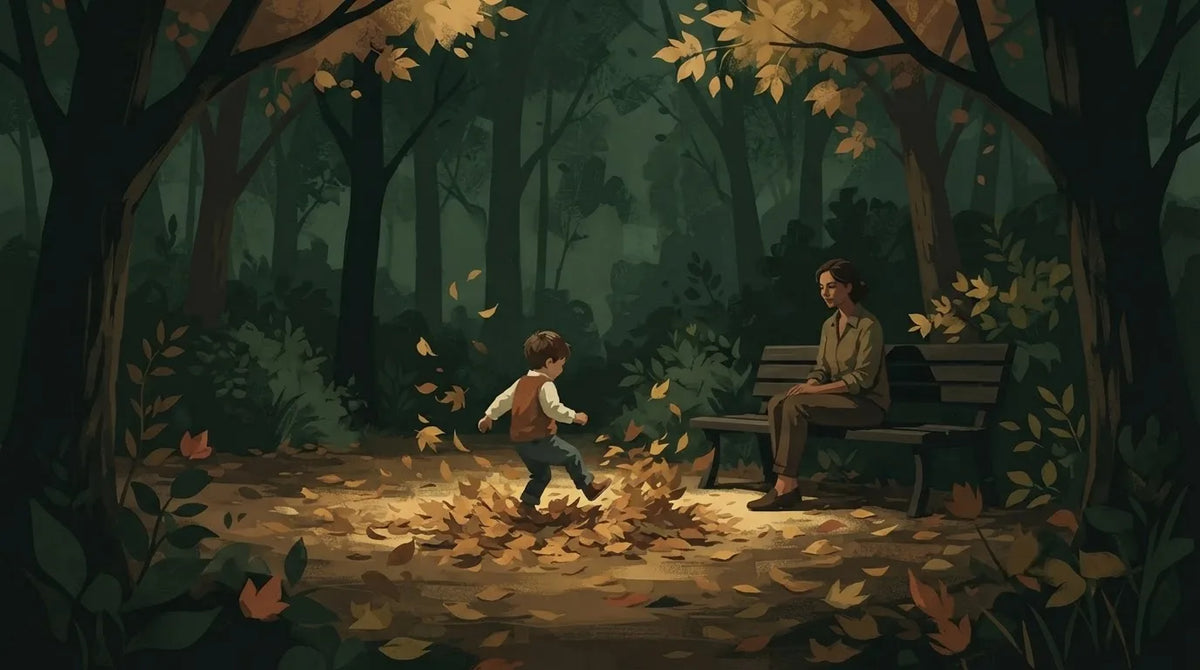
In short: You can choose a movement game for your child by whether it delights them and whether they come back to it, not only by the performance or supposed development it promises. It is a practical application of the idea that free time doesn't have to serve another goal. Joy doesn't have to arrive immediately and may look different for everyone.
- When choosing an activity, notice whether the play itself delights your child and whether they return to it.
- Promised performance or development isn't the only reason to bring an activity into play.
- If joy doesn't show up right away, don't automatically assume you've chosen wrong.
- Noticing your own feelings may take repeated questions and time.
A movement game for children doesn't have to be chosen by what the child is meant to achieve. If they play with joy and return to the activity on their own, that too is an important reason to give it space. This is a practical application of an idea from a parenting advice column, not a finding about specific toys or children's play: in it, Eleanor writes about how joy in everyday life can give way to the effort to reach the next goal.
You can choose a movement game for your child by whether it delights them and whether they come back to it, not only by the performance or supposed development it promises. It is a practical application of the idea that free time doesn't have to serve another goal. Joy doesn't have to arrive immediately and may look different for everyone.
For a parent who grew up with an emphasis on sacrifice, study, or performance, it can be hard to see free time as a value in itself. When choosing a movement activity, we then easily ask what it will bring the child and whether it "pays off." Try to leave room alongside these questions for a simple one too: Does it delight them?
When even free time has to be good for something
The letter writer describes how her family background shaped her view of rest. She is the child of first-generation immigrant parents who sacrificed a great deal so their children could attend university. She grew up with a clear idea of the path to success; she followed some of its steps and not others. She also mentions a marriage outside her own race and career decisions in which financial stability weighed heavily.
Yet the free time that other people apparently enjoy seemed incomprehensible to her. Hobbies, travel, or home renovations raised the question of what they were actually for. She wonders whether this is connected to a childhood in which attention focused on academic subjects and leisure activities had little place. Now that she is a mother, she thinks about how to show her children that life can be pleasant even without a further purpose.
This is not a reproach to parents, nor a simple guide to shedding a learned way of thinking. It is a naming of the fact that when everything must "be good for something," it can be hard to recognize what a person truly feels. You might ask yourself a similar question when choosing an activity for your child: are you deciding based on their interest, or mainly based on the result it should bring?
How a means can become an end
Eleanor likens this shift to a strangler fig: something that began as a means to a desired end can, over time, outgrow and crowd out the very thing it was meant to support. A person may start working or earning money in the hope of a better life, yet gradually devote so much time and attention to these goals that the good life itself recedes into the background.

According to the answer, the same can happen with hard work. The writer's parents gave up many things and worked with the original intention of creating a better life for the next generation. Immigrant families may leave behind the place and people they knew and work hard in a new country, sometimes in multiple jobs or in a new language. Yet the point of these sacrifices was not to worship sacrifice itself. It was meant to serve the goal of a better life for their children.
If hard work becomes an end in itself, the original intention can get lost. It is useful to keep this in mind with children's activities too: active play does not have to be another task that must be justified by what it supposedly brings. Joy does not have to prove its worth through yet another outcome.
Start with the question of what brings joy
When seeking joy, Eleanor recommends not starting with a list of activities that should work, nor with someone else's idea of what good free time should look like. It is more useful to notice your own reaction: what brings you joy? The answer may not come right away, especially if you haven't asked yourself this question in a long time.
Recognizing your own feelings can take a while. Eleanor compares it to reconnecting with a part of the body you haven't used in a long time. If you've gotten out of the habit of asking whether something pleases you, you may have to ask repeatedly before you even catch the answer.
So don't expect a new activity to immediately bring excitement or complete immersion in the present moment. The beginning may be more like curious experimentation: How do I feel doing this? What do I notice about myself? Even if the answer isn't clear yet, the observation itself is a way to return to what you are truly experiencing.
Joy doesn't have to look the same for everyone
The answer brings up very different examples of personal joy: someone feeds crows, someone dances to disco music, and someone dries weeds. These aren't suggestions meant to suit everyone. They show that joy can be specific and personal; it doesn't have to fit the general idea of what a worthwhile hobby is.
When a person makes more room for pleasure, they also make more room for themselves: for their own feelings and what they truly enjoy. Slowing down enough to ask yourself what you actually feel is, in itself, a way of paying attention to the present moment.
How to bring this idea into active play for children
This transfer is a practical application of the idea of joy, not the source's conclusion about children's activities. When choosing an active game, you can focus on whether the child enjoys the activity and whether they return to it. Instead of asking what performance or supposed development the activity promises, try noticing their interest in the game itself.

If something doesn't interest a child right away, that doesn't automatically mean you made a bad choice. The source notes that even for an adult, joy and immersion in an activity may not come immediately. At the same time, you can't conclude from this that the child will definitely grow to like the activity later or that a particular game will bring a certain result. It's enough to stay curious about what's happening now.
When deciding, you can separate two types of questions: what the activity promises and how the child responds to it. The first question concerns the expected outcome; the second concerns their actual experience. If joy in play matters to you, it's the second one that may be essential when choosing.
The writer asked how to live more in the present when everything since childhood had to be turned toward some purpose. The answer reminds her that parents' sacrifices were meant to lead to a better life, not to the accumulation of sacrifices for their own sake. You too can set the goal aside for a moment during an active activity and notice whether the child finds the game pleasant. The means shouldn't crowd out the very thing it was meant to be useful for.
Key takeaways
- When choosing an activity, notice whether the child enjoys the play itself and whether they return to it.
- Promised performance or development is not the only reason to include an activity in play.
- If joy doesn't appear right away, don't automatically assume you've chosen wrong.
- Perceiving one's own feelings may require repeated questions and time.
Practical tips
- During play, ask yourself a simple question: does this activity bring the child joy?
- Notice whether the child returns to the activity, rather than judging its value only by the promised outcome.
- If an activity doesn't spark immediate enthusiasm, leave room for observation without expecting that interest will definitely appear.


