
In short: According to the manufacturer, the Steady Bed range lets you change the bed from an enclosed cot through a low and a higher raised version all the way to a bunk setup. Both bunk configurations described can be split into two separate beds. When planning, therefore, distinguish between changing the side rails, the height under the bed, and the option of separating the beds in the future.
- The basic bed changes gradually: from four side rails to a day bed with three sides and then to a bed with a headboard and footboard.
- The low raised version places the bed 78 cm from the floor; the higher extension provides 140 cm of usable height under the bed.
- The classic bunk configuration has beds of 1.2 + 1.2 m and 103.6 cm of free space under the lower bed.
- The family bunk version combines a 1.2 m wide upper bed with a 1.5 m wide lower bed; according to the manufacturer, both bunk versions can be split into separate beds.
When siblings share a room, a bunk bed can suit their shared routine. Later, however, they may need separate beds, or the whole household arrangement may change. When planning, it is therefore worth paying attention not only to today's configuration but also to what it can be transformed into.
According to the manufacturer, the Steady Bed range lets you change the bed from an enclosed cot through a low and a higher raised version all the way to a bunk setup. Both bunk configurations described can be split into two separate beds. When planning, therefore, distinguish between changing the side rails, the height under the bed, and the option of separating the beds in the future.
According to the manufacturer, the Steady Bed range is designed to be changed using extensions rather than replacing the bed with every change. It includes a standard bed with side rails, a low raised bed, a raised bed, and two bunk configurations. With bunk beds, the option to split them into two separate beds is also important for when shared sleeping no longer suits the family.
When a shared children's room splits: which modular solutions are worth planning for in advance?
If you expect that your children may eventually need separate beds, it's worth checking when choosing whether the current configuration can be taken apart into independently usable beds. According to the article, in the Steady Bed range both of the bunk versions described can be split into two separate beds; the other extensions change the bed height and the use of the space underneath.
The transition doesn't have to happen all at once. A child may first move from a cot to a bed with side rails, later the way the room is used may change, and finally the shared sleeping arrangement may be divided. The modularity of this particular range lies precisely in the fact that it offers several configurations of a single bed, not just minor swaps of accessories.
Such flexibility matters when it matches the possible stages of your family. There's no reason to assume every configuration will be needed; what matters is knowing which changes the manufacturer describes for a given range and what actually changes with them.
Everyday use also shaped the design details
The manufacturer states that in developing the Steady Bed it drew on observing parents and children's everyday movement in the bedroom. One of the problems noticed was that a child in the upper bed may have nowhere to put a book, a small night light, or glasses before sleep. The solution is a felt storage box that attaches to the upper side rail and is meant to keep these items within reach without getting out of bed.
The manufacturer also paid attention to assembly and later adjustment. According to the article, the bed consists of nearly 70 components and more than 350 pieces of structural hardware. All four corner posts have symmetrical precision holes so that the front and rear posts aren't mixed up during assembly; this solution also makes it possible to choose the side for the ladder or change it later.
When planning a reconfiguration, this is a concrete detail that can tip the balance: the configuration isn't just a question of whether the bed can be raised or split, but also whether the ladder's position can be adjusted. The article claims that parents can change the ladder side even after assembly.
The base bed changes along with the child's needs
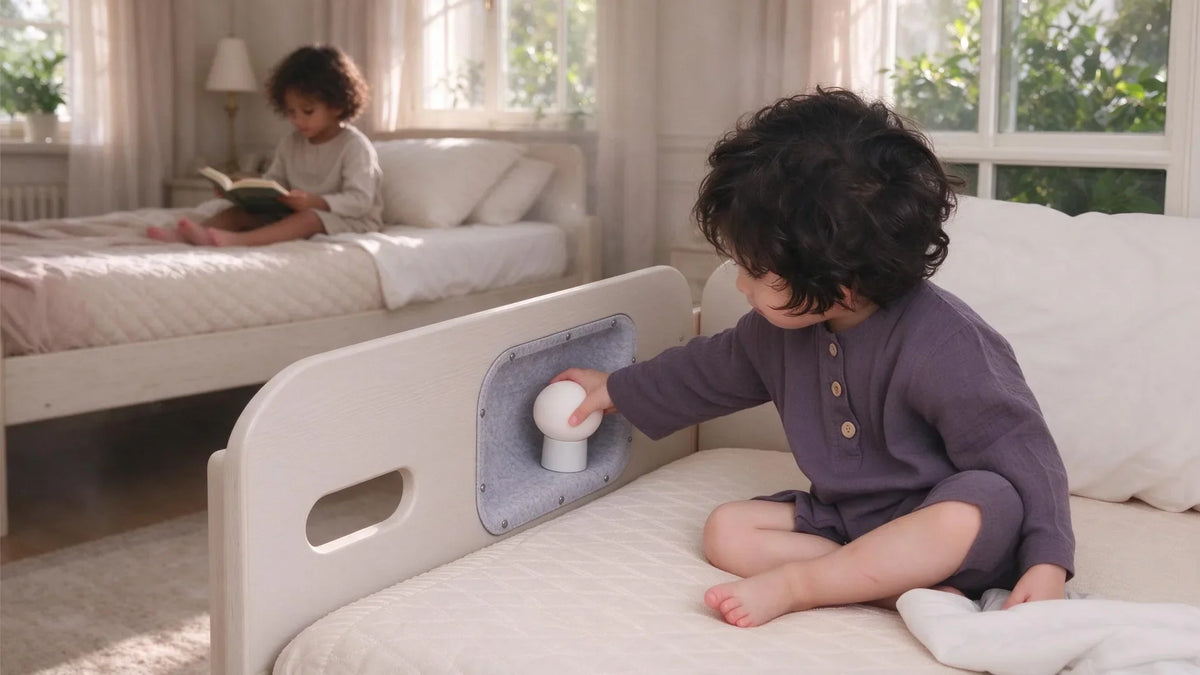
At the heart of the range is a standalone bed with four side rails. The manufacturer describes it as an option for a toddler transitioning from a crib: the rails define the sleeping area without the look of traditional vertical slats. As the child becomes more independent in using the bed, the left and right rails can be removed gradually.
 AI GENERATED
The first step is a day bed with three sides. The next is a standard bed with only a headboard and footboard. This is a gradual transformation of the base configuration, not a separate type of extension.
If the need to use the room's space also changes, a low raised extension can be added to the standard bed according to the article. This raises the sleeping surface so that it is 78 cm from the floor. The manufacturer states that the child is then at roughly the height of an adult's chest, which can make making the bed and nighttime checks easier.
The space under the bed can serve as a reading nook, a play area, or storage. These are uses suggested by the manufacturer, not a requirement for the conversion.
A taller extension creates more space under the bed
For older children and teenagers who need more headroom under the bed, the article describes a taller raised extension. This provides 140 cm of usable height under the bed. This figure refers to the space beneath the bed, not the height at which the bed itself sits.
 AI GENERATED
The manufacturer states that the space under the bed can be turned into a spot for a desk, a reading nook, or storage; it also mentions the option of placing a second bed there. According to the manufacturer's description, this configuration turns a compact room into a space with two levels of use.
When deciding, it helps to distinguish this version from the low raised bed: one provides 140 cm of usable height under the bed, while the other places the bed 78 cm from the floor. These are two different figures describing different parts of the setup.
A bunk bed can later serve as two separate beds
For siblings sharing a room, the manufacturer describes two bunk extensions. The classic configuration has beds measuring 1.2 + 1.2 m and states 103.6 cm of clearance beneath the lower bed. This clearance refers to the gap above the lower bed, not the usable height beneath a standalone raised bed.
The family configuration combines a 1.2 m wide upper bed with a wider 1.5 m lower bed. The manufacturer describes it as a solution for a parent or caregiver who wants to sleep with the child or care for them at night.
When changing from a shared room to separate sleeping, it matters that, according to the article, both bunk configurations can be split into two separate beds. This is a different kind of change than removing a side rail: the bunk bed arrangement becomes two separate beds. More details on the configurations described can be found in the manufacturer's article on the Steady Bed range.
What the manufacturer states about construction and stability
With a bunk or elevated bed, the manufacturer emphasizes the stability of the construction. The following dimensions and features are the data stated in their article; they are not in themselves an independent safety verification or a guarantee.
- The corner posts are made of solid beech wood and measure 6 × 6 cm. The manufacturer compares them with common industry posts, which according to the article measure less than 4 cm.
- The connecting steel screws are 1.2 cm thick. The article states that the usual standard is 0.8 to 1.0 cm.
- Hidden steel pins are placed at 9 points to distribute weight and reinforce the side rails.
- The ladder rungs are made of solid beech wood 2.2 cm thick, have anti-slip grooves, and are screwed in place.
- Horizontal cross braces 2 cm thick run along three sides and, according to the manufacturer, limit frame wobble. For the beech posts, the article also mentions FSC certification. If you are considering a convertible bed, these details help you understand how the manufacturer describes its construction; however, the decision about configuration remains separate from the stability claims.
So when planning a shared room, pay particular attention to what other shape the bed can take: from a bounded cot through elevated solutions to a bunk assembly that can be split into two separate beds. According to the manufacturer, the Steady Bed range is designed to adapt to different stages of childhood. For a family, a concrete advantage is above all the clearly described option of moving from shared bunk sleeping to two separate beds.
Key takeaways
- The basic bed changes gradually: from four sides to a day bed with three sides and then to a bed with a headboard and footboard.
- The low elevated version places the bed 78 cm from the floor; the higher extension provides 140 cm of usable height under the bed.
- The classic bunk configuration has beds of 1.2 + 1.2 m and 103.6 cm of free space under the lower bed.
- The family bunk version combines a 1.2 m wide upper bed with a 1.5 m wide lower bed; according to the manufacturer, both bunk versions can be taken apart into separate beds.
Practical tips
- When comparing configurations, separate three measurements: the height of the bed from the floor, the usable height under a raised bed, and the clearance under the lower bunk of a bunk bed.
- If you are considering a bunk setup, check whether the specific width of the upper and lower bunks suits you, and whether a family configuration with a wider lower bunk also works for you.
- When planning a change of layout, pay attention to the position of the ladder: the article notes that symmetrical corner posts allow you to choose or later change its side.
- If a child is to sleep on the upper bed, also consider a solution for storing small items: the manufacturer describes a felt box that attaches to the upper side rail for a book, a small light, or glasses.


